What were the main objectives when the Museum’s website was created or redesigned?
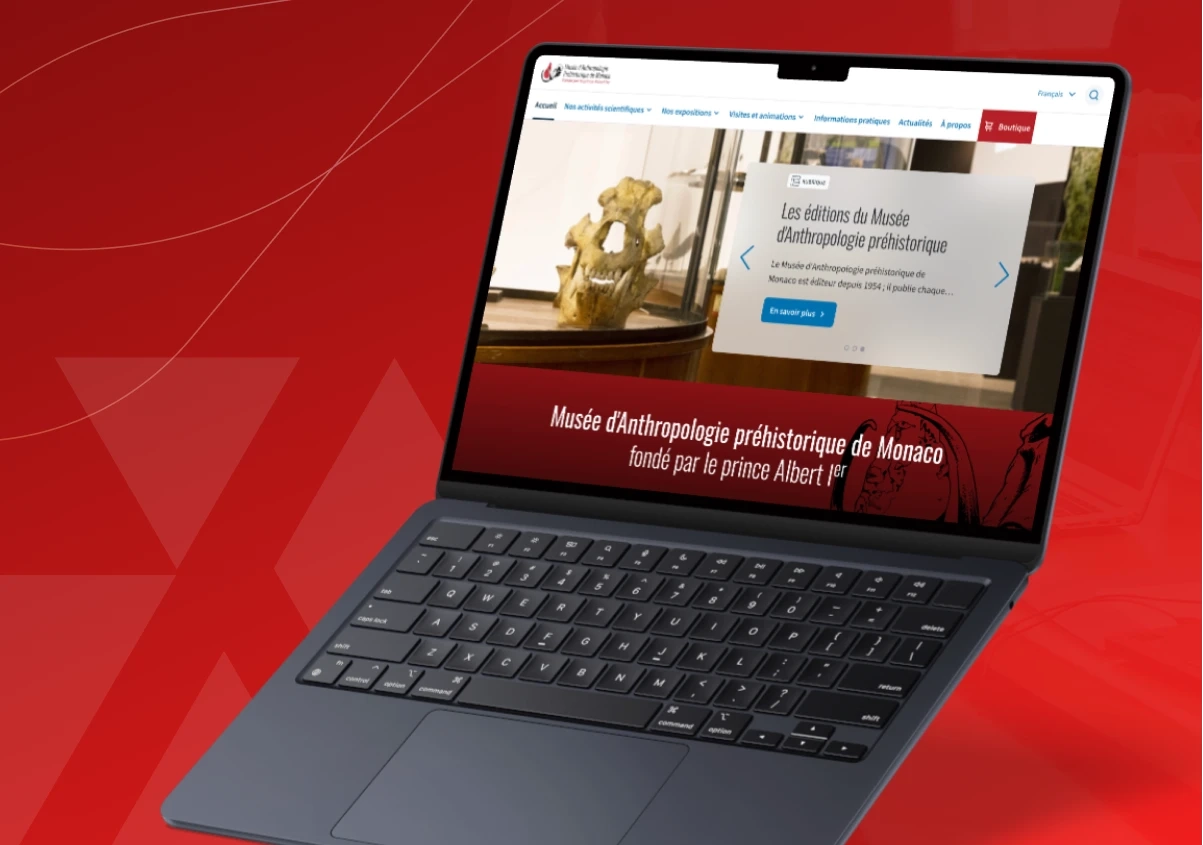
The Museum approached the Information Systems Directorate (ISD) of the Monegasque Government to have its website hosted and managed using the same content management system as the Government’s other websites: the Ibexa CMS. This effectively ensures consistency in the structure of the Principality’s websites, whilst guaranteeing efficient content management. In turn, the IT Department called upon Inforca to assist with the redesign of this website. I should point out that the previous website was built on the WordPress CMS… The design was outdated and content management was complicated. The display of certain content also had usability issues.
The Museum therefore wanted their new website to be brought up to date, with an emphasis on a more intuitive user experience. This applies to both users and content contributors!
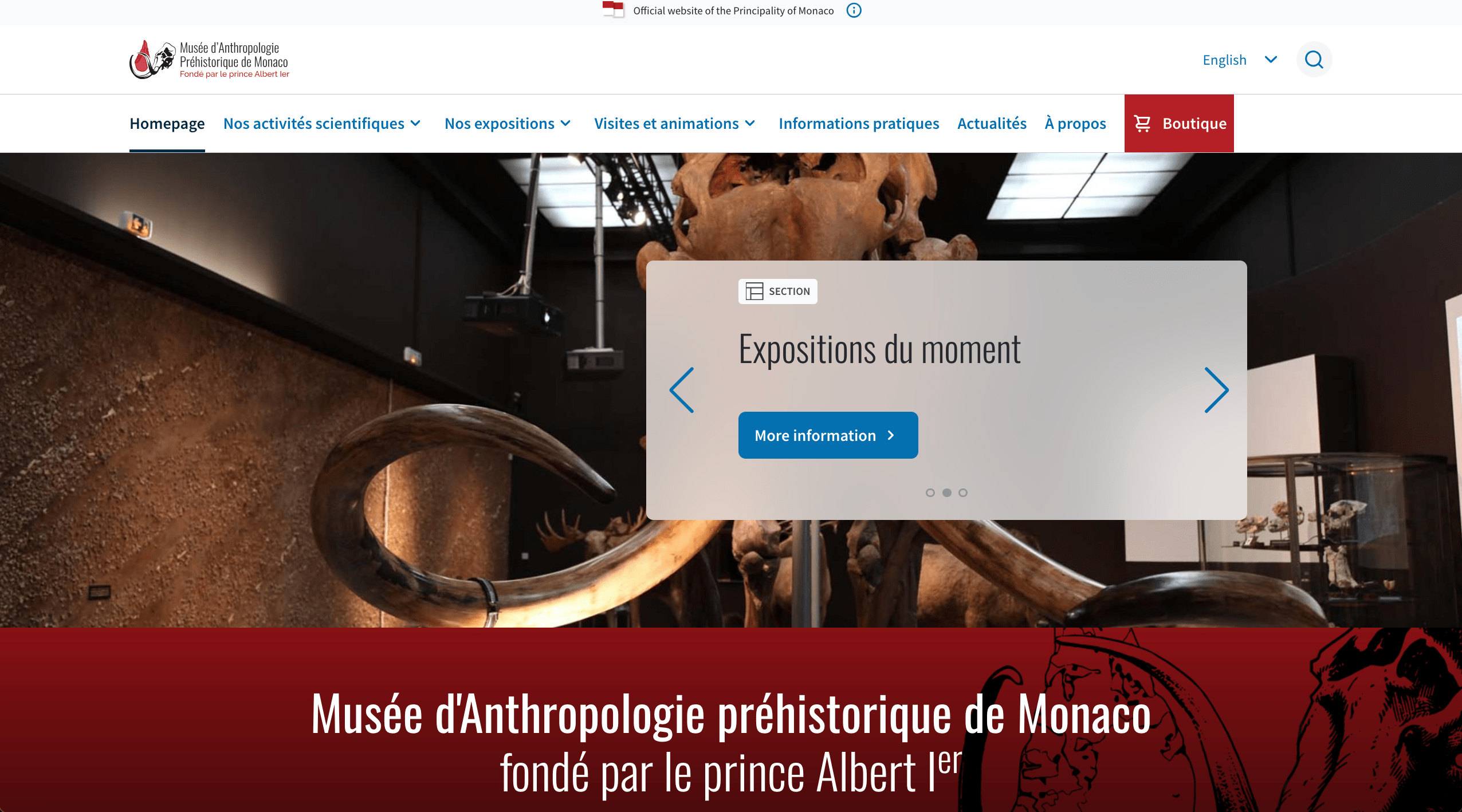
Tell me more! How does the website present the museum’s archaeological and prehistoric collections in an interactive and educational way? The new site follows the same approach as other government websites. These sites use a Design System that ensures a consistent design across them all and shared functionalities…
…Let me just cut you off for a second, Sébastien! What’s a Design System?
No worries, it’s true I can get a bit carried away with my explanations. A Design System ensures graphic and user experience consistency across all websites. In other words, if you change the colour of the footer banner at the bottom of the museum’s homepage, for example, it will automatically change on all the other linked websites.
OK, that’s actually really handy for institutional websites!
Absolutely. This design and these features are designed to be user-friendly, intuitive and perfectly suited to navigation and usability standards. It’s also easier for contributors to use, as I mentioned earlier, thanks to the shared features of the Design System. As a result, the Museum now has a website that highlights certain content to make navigation easier and more enjoyable. It also offers tools and content types that improve the relevance of the information. For example, events are now easily accessible and identifiable thanks to a specific search function (‘Calendar’).
How did you take into account the needs of different types of users, such as researchers, students and the general public?
It is the IT Department that provides us with the ‘requirements’. It is therefore the IT Department that assesses these with users. It has the authority to create different types of content based on the identified needs and only asks us to add new features. It’s worth noting that they already have a wide range of features at their disposal, such as the ‘Calendar’, the ‘Search Engine’, the ‘Form’, etc.
Finally, how do you manage the ongoing maintenance and updates to the website to ensure it runs smoothly?
The key lies in mutual trust between the various stakeholders. The IT Department and the Digital Services Department (DSN) of the Government of Monaco call on us to manage the maintenance of the various websites.
Our developers, who are certified in the Ibexa solution, strive to find swift and sustainable solutions to any bugs reported. And as security is a priority for us, we regularly apply the updates provided by the publisher to ensure the solution remains secure.
Interview by A.F., Head of Digital Development and Events at Inforca, with Sébastien, Lead Full-Stack Developer at Inforca’s digital agency.